
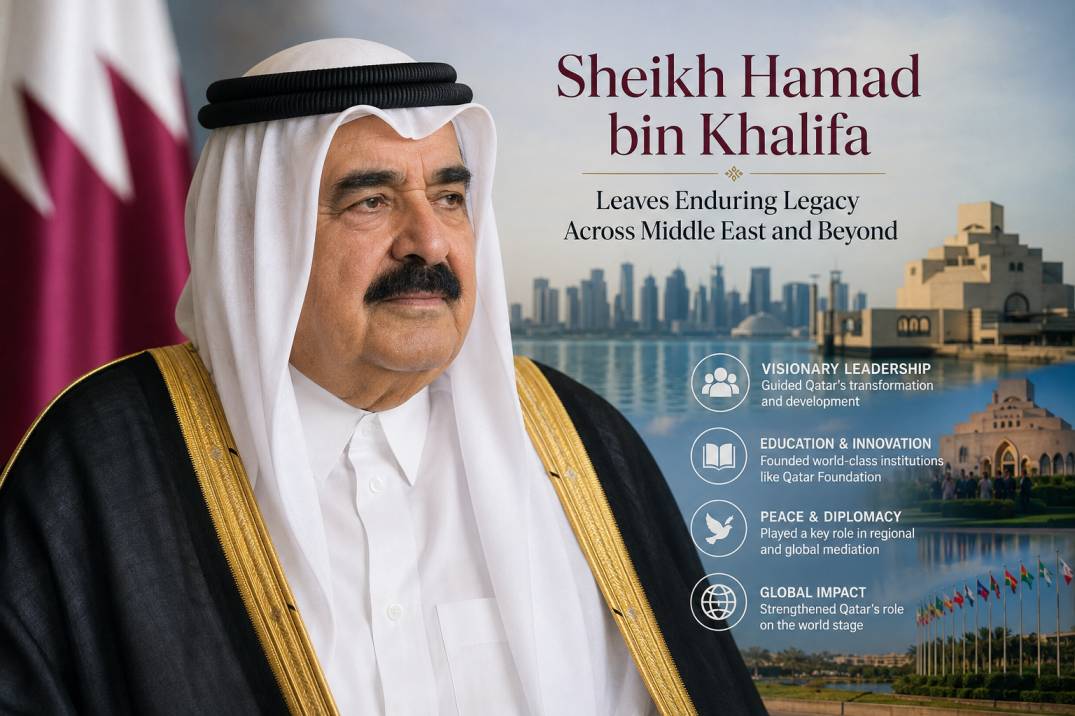
The death of Sheikh Hamad bin Khalifa Al Thani signifies the conclusion of a pivotal chapter in modern Arab history, as leaders and commentators across the region reflect on a legacy that not only transformed Qatar but also amplified its influence globally. Under his rule, Qatar experienced a significant metamorphosis, fueled by the strategic development of its natural gas resources and substantial investments in education, healthcare, infrastructure, culture, sports, and diplomacy. The institutions established during this era continue to shape Qatar’s future and serve as a blueprint for development throughout the region.
Sheikh Hamad’s leadership philosophy was characterized by a blend of confidence, strategic ambition, and a focus on human capital investment. This was evident in major initiatives such as Education City, the establishment of world-class healthcare facilities, research centers, cultural institutions, and the successful hosting of the FIFA World Cup Qatar 2022. These efforts reflected a broader vision of modernization that remained deeply rooted in national identity and cultural authenticity.
Regional diplomats and analysts have lauded Sheikh Hamad’s contributions to strengthening Arab cooperation, advancing humanitarian efforts, and positioning Qatar as a credible mediator in international conflicts. They highlighted how his approach seamlessly connected economic growth with education, innovation, and dialogue, thereby redefining global perceptions of what a small state could achieve on the international stage.
The legacy of Sheikh Hamad continues to resonate through Qatar’s institutions, diplomatic engagements, and humanitarian programs, providing opportunities for future generations. His impact leaves a lasting impression not only on the Middle East but also on the broader international community, underscoring a vision that aligned economic prosperity with cultural authenticity and global engagement.