
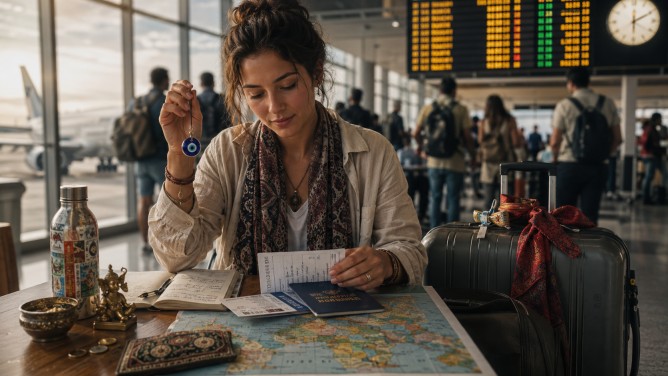
Traveling often involves an array of traditions and rituals that add an extra layer of excitement and significance to the journey. Across the globe, various cultures have developed unique superstitions aimed at ensuring a safe and lucky voyage. These practices, though lacking scientific validation, remain deeply embedded in travel customs and are cherished by many as part of their cultural heritage.
One such belief involves carrying a clove of garlic, particularly popular in the Balkans. Garlic is thought to ward off negative energy and the evil eye, making it a protective talisman for many travelers who tuck it into their luggage. Another common practice is touching or tapping an airplane’s exterior before boarding. This gesture is seen as a way to bring good luck and offers comfort to nervous flyers. Similarly, stepping onto a plane with the right foot first is considered auspicious, symbolizing the start of the journey on a positive note.
Water also plays a role in travel superstitions. In regions of the Middle East and the Balkans, pouring water behind someone as they depart is believed to ensure a smooth, safe trip and a safe return home. Meanwhile, numbers carry significant weight in travel-related beliefs. In Western cultures, the number 13 is often avoided due to its unlucky connotations, while in China, the number 4 is shunned for its resemblance to the word for death. Italians traditionally view the number 17 as unlucky. These beliefs can influence choices like hotel room numbers and building floors.
Certain rituals are practiced before the journey begins. In Slavic traditions, sitting quietly on packed luggage before departure is a common custom. This pause allows travelers a moment to reflect and mentally prepare for their trip. Another belief cautions against sweeping immediately after someone leaves, as it is feared that doing so might sweep away the person’s good fortune or hinder their safe return.
While these superstitions may not have scientific grounding, they offer an intriguing glimpse into the cultural practices that continue to accompany modern travel. For many, these rituals are cherished as a means of preserving family traditions and imbuing their journeys with a sense of identity and anticipation.