
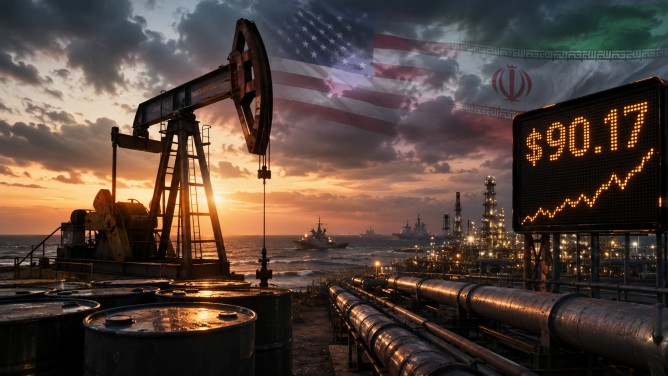
Oil prices have surged significantly following the conclusion of a two-month negotiation period between the United States and Iran, which ended without achieving a peace agreement. This outcome has sparked concerns about the potential continuation of conflict and its impact on global energy supplies. Brent crude, a key benchmark for oil prices, has exceeded $90 per barrel, reaching approximately $91.63, marking its highest level since July 30. The price increase follows a firm stance by U.S. President Donald Trump, who has demanded Iran’s surrender and cautioned of a possible escalation if diplomatic efforts prove unsuccessful.
The strategic Strait of Hormuz, a vital route for global oil shipments, has become a focal point of concern as the number of commercial vessels traversing this waterway has noticeably decreased. This reduction has intensified fears of enduring disruptions to oil supplies. Iran has suggested that it might take a more aggressive military approach should negotiations fail, adding to the tensions in the region. Reports of an attack on a cargo vessel navigating the strait have further exacerbated worries about the safety and security of shipping activities in this crucial area.
Investors are now bracing for a possible extended disruption in oil supplies, anticipating that any prolonged closures or reduced traffic through the Strait of Hormuz could exert additional upward pressure on crude oil prices. The potential for enduring instability in this key shipping lane underscores the broader implications for the global energy market.
Analysts are also issuing warnings about the potential for further upheavals in global energy markets, particularly as the conflict in the Middle East coincides with the ongoing war in Ukraine. This confluence of crises could result in additional shocks to the markets, potentially leading to increased prices for both oil and gas on a global scale. The interconnected nature of these conflicts highlights the complex challenges facing energy markets worldwide.