
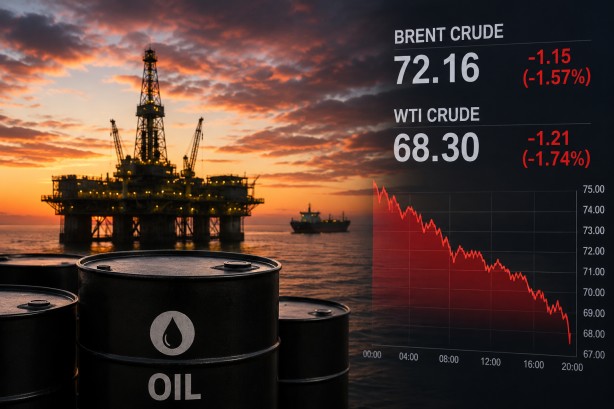
Oil prices saw a slight dip on Thursday as investors opted to secure profits amid rising tensions between the United States and Iran. Brent crude dropped by 0.52%, settling at $84.51 per barrel, while US West Texas Intermediate crude decreased by 0.29% to $79.37 per barrel. Despite these declines, both benchmarks remained near their highest levels in a month, following a period of gains.
The market’s current mood is heavily influenced by worries over potential disruptions in oil supply, triggered by the recent US military strikes on Iranian targets and Iran’s subsequent threats to limit energy exports in the region. A critical area of concern is the Strait of Hormuz, a vital passage for a large portion of the world’s oil and liquefied natural gas trade. Reports indicate that shipping activity through this crucial route has diminished following the latest flare-up in tensions.
Geopolitical strife continues to underpin elevated oil prices, but investors are keeping a close watch on whether the conflict might result in significant interruptions to energy supplies. The possibility of further price increases looms if tensions escalate and export channels remain obstructed. Conversely, a reduction in hostilities could potentially drive oil prices down as the year progresses.
The Bab el-Mandeb Strait, another key corridor for energy transportation, is also under scrutiny, with concerns mounting that regional allies might become embroiled in the conflict, further complicating the situation. Analysts are closely monitoring these developments, as any involvement of additional parties could exacerbate regional instability and impact the global energy market.