
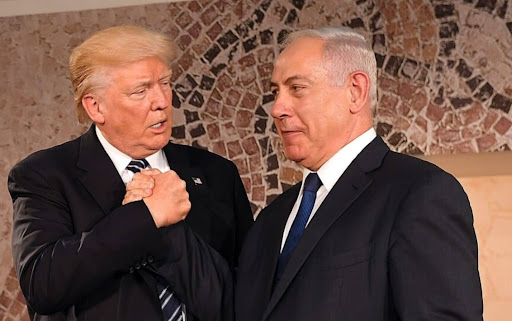
A pattern has been emerging in the Trump-Netanyahu campaign against Iran that deserves attention: US President Donald Trump’s strategic rhetoric has been retreating — from regime change, from support for popular uprising, from the most expansive versions of American war aims — while Israeli Prime Minister Benjamin Netanyahu’s strategic ambition has been advancing, with each significant operation extending the scope and depth of Israel’s campaign against Iranian power. The two leaders are moving in opposite strategic directions within the same alliance, and that divergence is becoming more pronounced over time.
Trump’s strategic retreat is visible in specific public statements. The president who once suggested Iranians might soon choose a new government is now describing regime change as “a very big hurdle.” The president who implied American support for a popular uprising is now expressing skepticism about its feasibility. His definition of success has narrowed toward nuclear containment — a more modest but more achievable objective that acknowledges the limits of what external military pressure can accomplish.
Netanyahu’s strategic advance is visible in the operations Israel has been willing to conduct. The campaign against Iran has grown in geographic reach, in the value of targets struck, and in the breadth of Iranian power it is designed to degrade. The South Pars strike was an expression of an advancing strategy — each major operation adds to the comprehensive degradation that Netanyahu’s vision requires. His domestic political position gives him the mandate to keep advancing even as Trump is retreating.
The divergence between Trump’s retreat and Netanyahu’s advance is widening the gap between their respective definitions of adequate success. When Trump says “enough is enough” — as his nuclear containment framework implies — he and Netanyahu will be at different points on their respective strategic journeys. Managing the endpoint will require bridging a gap that has been growing, not narrowing, throughout the conflict.
Director of National Intelligence Gabbard’s confirmation of different objectives is a snapshot of this divergence at a specific moment. As Trump retreats and Netanyahu advances, that snapshot will continue to change — and the gap it documents will continue to widen unless deliberate efforts are made to bring the two leaders’ strategic trajectories back toward convergence.