
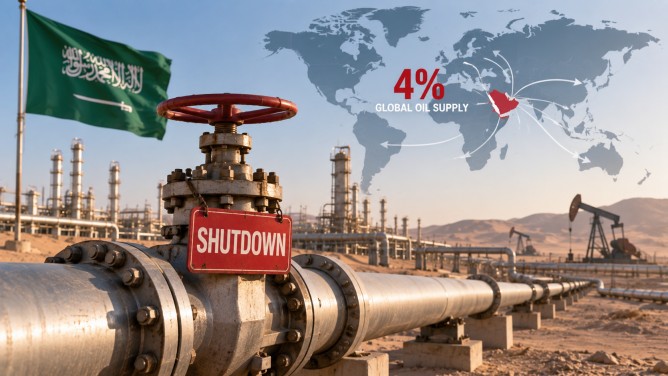
Saudi Arabia has temporarily closed its critical East-West oil pipeline following an attack, heightening concerns about the stability of global crude oil supplies. This development coincides with the increasing influence of Iran-backed Houthi forces along Yemen’s Red Sea coast, potentially threatening regional oil shipments. The Houthis have gained significant territory near the Bab el-Mandeb Strait, a crucial maritime passage linking the Red Sea with the Gulf of Aden, which has raised alarms over the safety of oil transport in the region.
The East-West pipeline, which spans 1,200 kilometers, was shut down on September 12 as a precautionary measure after being targeted the previous day. This pipeline is strategically vital for Saudi Arabia as it enables the movement of crude oil from its eastern production zones to the Red Sea, offering an alternative route for exports when the Strait of Hormuz faces disruptions. Amidst heightened tensions in the US-Iran conflict, Saudi Arabia had already increased exports through its Red Sea facilities, making the recent attacks a potential threat to the kingdom’s export capabilities.
Market analysts warn that if the pipeline remains closed for an extended period, it could significantly reduce the amount of oil available in global markets. This concern is compounded by Brent crude prices already surpassing $100 per barrel amid the escalating tensions in the Middle East. If disruptions persist in both the Strait of Hormuz and the Bab el-Mandeb Strait, the global energy supply chain could be severely affected, leading to increased transportation costs and further surges in crude prices.
The potential for rising oil prices carries broader economic implications, as it could drive inflation in major economies by pushing up fuel, transportation, and production costs. Nations heavily reliant on energy imports might face mounting pressure on their trade balances and currencies. The impact on global oil supplies and energy markets will largely depend on the duration of the Saudi pipeline closure and the ongoing security dynamics around the Red Sea and the Strait of Hormuz.